
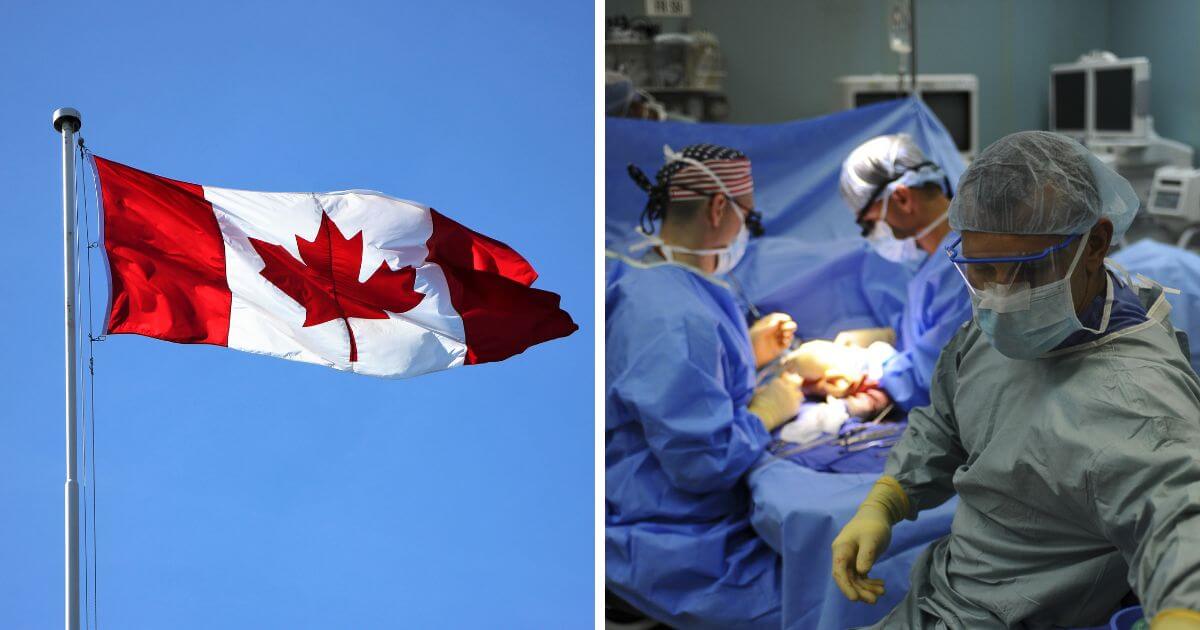
Canada’s fast-growing Medical Assistance in Dying (MAiD) programme is facing renewed scrutiny after a landmark case in which the heart of a 38-year-old man who had chosen euthanasia was successfully transplanted into a 59-year-old American patient with heart failure. The procedure, reported by the National Post and detailed in a joint paper by the University of Pittsburgh Medical Center and The Ottawa Hospital, is being described as the first known heart transplant following MAiD.
According to the medical team, “provision of MAiD and death determination occurred in keeping with Canadian standards” and death was declared within seven minutes of initiating the protocol. The donor, who had ALS, had indicated his wish to donate his organs. Canadian officials say organ donation after MAiD is voluntary and governed by existing safeguards, but ethicists and pro-life advocates warn the practice could create incentives or subtle pressures on vulnerable patients.
Since Canada legalised assisted dying in 2016, at least 155 people have donated organs or tissue following MAiD, according to Canadian Institute for Health Information (CIHI) data. Of 894 euthanised donors, around seven per cent had their organs harvested for transplantation, and CIHI estimates that five per cent of organ transplants in 2024 used organs from people who had received MAiD. Canada now performs more of these procedures than any other country, prompting some observers to call it a “world leader in ODE” (organ donation after euthanasia).
The Ottawa–Pittsburgh team said “longer-term data and data on additional cases will be required” but that the case suggests “safe cardiac transplantation can be performed after MAiD.” Critics argue that “safety” for the recipient is not the only issue: Wesley J. Smith, a US bioethics commentator, said the practice raises profound concerns about whether people with disabilities, mental illness or feelings of being a “burden” could be influenced to end their lives to benefit healthier recipients.
A review paper cited by the National Post noted that Canadian practice varies by province. In Ontario and British Columbia, people requesting MAiD are proactively informed about organ donation; in Alberta and Manitoba, officials wait for the patient to raise the subject. The authors warned that while withholding information could limit patients’ autonomy, proactively raising organ donation “may cause undue societal pressure,” and that “the desire to become a donor may be a driver for the MAiD request.”
Canada’s regulators insist that strict consent rules apply and that only people who meet Health Canada’s eligibility criteria can access MAiD. But several doctors and advocacy groups have questioned whether those criteria are always followed; some Ontario providers have reportedly been referred for violating the criminal code. Applied Cardiopulmonary Pathophysiology, a medical journal, documented similar Belgian cases where donors were prepared in adjacent rooms and intubated within minutes of death to preserve organs.
Proponents say organ donation after MAiD respects patient autonomy and increases the supply of desperately needed organs. Opponents argue it blurs ethical boundaries, especially when the donors are not terminally ill but living with chronic conditions or mental health challenges. “Not informing patients about the possibility of donation can prevent them from exploring the opportunity to donate their organs and negatively impact their autonomy,” the review authors wrote, “while informing them of this possibility may cause undue societal pressure for donation.”
As Canada prepares to expand MAiD eligibility further in 2025, the issue is becoming a flashpoint for global debate about the intersection of assisted dying, organ donation and medical ethics. For now, the first heart transplant after euthanasia stands as both a medical milestone and a warning that the boundaries between end-of-life care and organ procurement are being redrawn in real time.
